Friday, April 30, 2010

Turkey's Real Architecture

Let me preface this by saying I will follow with a post on beauty. But since it has taken me a few years to get over my culture shock (read: the "everything's better in Canada mentality") and see the beauty here, I'll introduce you to this subject as I experienced it, namely ugliness before beauty.

Turkey is famous for its beautiful mosques and Ottoman architecture; its colourful tiles and intricate copper work. But the reality is that there is unfortunately a lot of ugliness too; ugliness made all the more so by the hot, dustiness in Adana. A former industrial city, the wealthy business owners have mostly left, and migrants from the surrounding rural areas have moved in, giving Adana the nickname of city-sized village.

An overview of the visual landscape:
  • a prevalence of concrete
  • the use of brightly coloured paint to soften said concrete
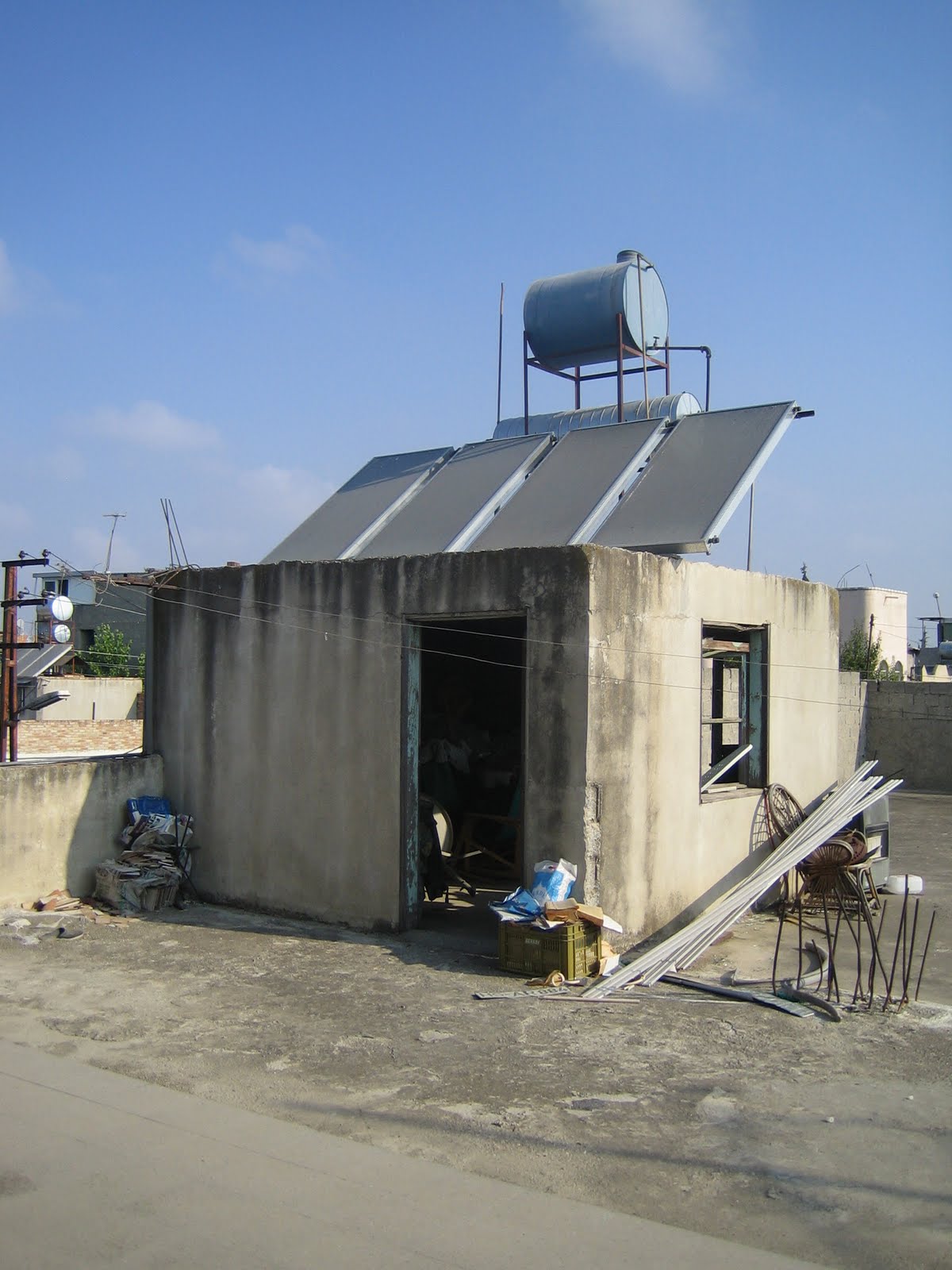
  • flat roofs littered with solar panels and hot water tanks
  • satellite dishes and air conditioning units visible on all vertical surfaces
  • uneven sidewalks and storefronts
  • litter
  • little greenery; lots of exposed dirt and dust
I understand that economics is a factor, but I am not criticizing poverty. Often, it is the places where the most money is spent that are the most offending. For Adana is in many ways booming, and construction is taking place everywhere -- most of it to house the growing middle-class population. Luxury apartments and villas have also appeared in the three years I've been here.

But even if the building is more than just a painted concrete block and promises to provide a bit of beauty, just as it is receiving its finishing touches, up go the water tanks and the air conditioning units. Inside, wall tiles are often laid crookedly and stained by dripped paint; wood trim and parquet flooring also have paint on them; and electrical outlets 'float' in the middle of walls, having been placed several feet off the ground beside light switches; and for mysterious reasons, crown mouldings hang from the ceiling six inches in front of windows, allowing curtains to be mounted on a track on the ceiling behind.


For me, it is the collision of modernity with a simpler way of life, where modern trimmings and appliances are used by those who have far more important concerns than aesthetics. I'd far rather see an old wooden window frame with hand-sewn curtains, than sloppily executed attempts at elegance and luxury.

Thursday, April 29, 2010

Where the (Turkish) Sidewalk Ends

As a mom with a baby and therefore a pram, I have recently taken an interest in sidewalks. Who knew that there were so many ways they could go so very wrong.

As a child, the title of Shel Silverstein's Where the Sidewalk Ends captured my imagination, and I wondered what that would look like. It was an improbable notion, and I filed it away in my mind along with mythical images of Narnia and Enid Blyton's Faraway Tree characters. But a few years ago, quite literally dazed and confused having newly arrived in Turkey, Silverstein's phrase came back to me as I stood a good three feet above the road beside me. The sidewalk had ended.

I was living in my future mother-in-law's house in the old mahalle, or neighbourhood. No apartment buildings, just one and two-storey concrete homes, some new, some old; some with modern kitchens and others with dirt floors and outhouses; some with new Pimapen PVC windows, some with nothing more than large square holes in the concrete walls. Occasionally the clopping of horse hooves would mix with the traffic sounds, and at night I'd awaken to the sound of a flock of sheep being quietly led down the street past our house to its next pasture.

The mahalle of Turkey follow their own laws of order and appear chaotic to outsiders. (Or perhaps I should say they appear chaotic to anyone except insiders?) The winding streets don't have names, only numbers; yet the numbers themselves seem random, bearing no relation to each other. There don't seem to be any zoning laws either, and our neighbours were an ironsmith and a marble cutter. Needless to say, the mahalle was a visual and aural cacophony. Going out into the city alone was something I had to push myself to do; it was tempting to stay safely shut in behind the high stone walls surrounding the family home.

It was on one of these early ventures into the wild that I found myself in midair, unable to continue forwards nor able to step off the sidewalk and onto the road beside me. I should interject here that no one except me seemed to use the sidewalks; however, walking in the road seemed too frightening. So there I'd been, walking along the sidewalk, not realizing it was on a slight incline. From the relative ''safety'' of the sidewalk, I'd been looking at the hubbub around me and so I also hadn't been looking at what lay ahead of me. And then, suddenly, the sidewalk just ended. I wish I had a picture to show you; it was really quite shocking.

After recovering from my surprise, I had no choice but to backtrack ten feet to where the road and sidewalk were still more or less level, and then walk on the road.

Fast forward three years. I've learned to look ahead and anticipate sidewalk anomalies. Still, it is surprising at the impediments I encounter. There's 'the sudden drop off' (located bottom center of the picture below; notice I'm walking in the middle of the road. Notice too the way the sidewalk runs into a wall a few metres beyond the drop off):

Then there's the 'too narrow' sidewalk. Notice the pedestrians again walking in the middle of the road:
Sometimes the sidewalks are ridiculously wide, but I won't complain about that. That's not a bad thing, just an odd thing.
The street where we currently live has a sidewalk that slowly narrows until it disappears into a wall; the usable parts are rendered unusable because cars park on it.

I wonder, did Shel Silverstein get inspired by a trip to Turkey?

Tuesday, April 27, 2010

The Architecture of Happiness

I've been reading Alain de Botton's The Architecture of Happiness, and in addition to the pure joy I feel over the brilliance of his prose (I'll treat you to an example in a moment), I'm basking in the pleasure self-recognition brings. Through his explanations of why architecture affects our mood and what our preferred style reveals about us, I've at last come to understand why the lack of beautiful architecture and design here in Turkey bothers me so much. He's also helped me view my surrounds less harshly.

I'll write a separate post about the local architecture here in Adana/Tarsus soon; for now, let me give you a glimpse:


And to make up for that, let me treat you to the following, in which de Botton describes the geometrically perfect rue de Castiglione in Paris:

"The street speaks of the sacrifice demanded by all works of architecture. The stones might have preferred to continue sleeping where they had lain down to rest at their geological bedtime 200 million years before, just as the iron ore of the balustrades might have opted to remain lodged in the Massif Central under forests of pine trees, before they were coaxed from their somnolence along with a symphony of other raw materials" (The Architecture of Happiness 176-7).
Reblog this post [with Zemanta]

Saturday, April 24, 2010

Do-It-Yourself Government Services

Yes, Another Canada FlagImage by Cuppojoe via Flickr

Living in Turkey has made me appreciate Canada's well-established and functioning infrastructure, courtesy of our taxes: public schools with libraries; excellent postal service; pothole-free roads with great signage; garbage and recycling pick up ... I could go on and on; I could write a separate post for each item on my list. But I'll stick to the point: where I might have formerly complained about constant roadworks, my doctor's inability to see me for two weeks, and large class sizes, I've gained perspective. I will never complain again.

My maternity leave recently ended after sixteen weeks. I received full pay the entire time, without ever giving any thought to where the money was coming from. Typically Canadian, I take my social services for granted. All I knew was that my contract stated I had sixteen weeks of leave at full pay; since I was indeed getting what my employer had promised, I gave it no further thought.

As it turns out, my leave was courtesy of the Turkish social security system, the Sosyal Güvenlik Kurumu (SGK). For dramatic effect, though, I'll tell my story first and explain later.

Here's a simplified (note: simplified!!!) recap of what I had to do to go on maternity leave:
  • About two months before my due date, my doctor casually mentioned I'd need to defer my maternity leave, unless I wanted to stop working immediately; Turkish maternity leave is eight weeks before and eight weeks after the birth. Since I had no intention of 'wasting' eight weeks of precious baby time before the baby even arrived, I was understandably alarmed -- if I didn't defer the mat leave before the date it was scheduled to begin, I'd lose it.
  • I collected documents from my employer's accountant, my doctor and the hospital's business office, and shuttled said documents back and forth between the three several times.
  • Three weeks before my due date, in accordance with Turkish law, I stopped working and began my leave; Baby arrived; I spent a glorious thirteen weeks at home with him (he arrived on his due date, so I did indeed use three weeks of my mat leave pre-baby. I continued to receive my monthly salary.
  • Before I returned to work I repeated the document run-around, adding the Sosyal Güvenlik Kurumu (SGK), Turkey's Social Security Service, to my list of stops; my mat leave needed to be officially ''closed.'
By this time, I had learned that my employer was not being left out-of-pocket on my account, and that the SGK was financing my leave. Where I was wrong, was in assuming that while I was receiving monthly deposits in my bank account, my employer would be too -- from the SGK.

Imagine my surprise when my employer told me that upon my return to work, the SGK would deposit, in my name, the previous four months' pay at the PTT, the Turkish postal service which also acts as a bank. I would have to claim that money and bring it to my employer.

Let me say that again: I would have to claim that money and bring it to my employer.

Let me rephrase that: I would have to pick up four months' worth of salary, in cash, and give it to my employer!!!

Four months worth of salary is not a small amount of money. Especially all at once. Especially in cash.

You see, my employer had chosen to continue paying me while I was on leave, one of the many perks of being a foreigner in this country. Normally, employers don't get involved with maternity leave pay. And as I'd already learned, the government doesn't pay out until the maternity leave ends, and then they pay to the patient, not the employer.

Which means that your average Turk receives no pay while on maternity leave. And that the SGK is only logistically sophisticated enough to deposit money in your name at the PTT. (Not to your bank account; not in the form of a cheque to your home address.) And that should an employer choose to pay an employee while on maternity leave, the company is at the mercy of their employee, who may choose to run off with the money instead of facilitating the company's reimbursement.

I love Canada!

Friday, April 23, 2010

National Holidays and the Art of Manipulation

April 23rd is Children's Day in Turkey, and a holiday for schools and all civil servants. And since this year's holiday falls on a Friday, it's a long weekend! My foreign colleagues and I are spending the weekend at the beach, or taking an overnight trip to another city; some are staying put and enjoying three wonderful days at home.

Either way, it's wonderful to have this unexpected holiday every year -- unexpected because I always forget about it until the last minute. Unlike Canada's holidays -- Labour Day and Thanksgiving in the fall, Easter and Victoria Day in the spring, and of course Canada Day and the arbitrary Civic holiday in August -- which have been ingrained in me to the point that my subconscious expects them, Turkey's holidays still seem random to me.

Take next month's May 19th holiday, Youth and Sports Day and the Commemoration of Atatürk, which falls on a Wednesday, giving us a mid-week break. Although I'm certainly not going to complain about a day off, wouldn't it be nicer hitched on to a weekend?

Everyone knows that the May 24th weekend falls around May 24th, because Victoria Day always falls on a Monday. Labour Day and the August Civic holiday are likewise always celebrated on Mondays. If you ask me, this is masterful.

Unfortunately, Turkey stays true to its holidays' real dates. In fact, whenever a holiday falls on a Saturday or Sunday, you 'lose' the holiday, since you're off for the weekend anyway! We Canadians, by contrast, have somehow convinced our government to give us the first working day after the holiday off! Genius.

Tuesday, April 20, 2010

Published!!!

I was recently invited to submit an article for Pink Pangea, a women's travel blog. Needless to say, I was thrilled! I agonized (ok, I exaggerate slightly ... but I did think about it for a few weeks) about how to fit what they wanted -- travel advice for women -- with my own writing, which focuses more on daily life in a foreign location. I finally settled on a topic and am pleased with the resulting piece. You can read my submission here.

Monday, April 19, 2010

Sayings, Part II

Now that I'm a new mother, I hear gözün aydın a lot (click on the link to read my previous post, in which I explain what this expression means). But I've also become acquainted with a new saying, anneli babalı büyüsün, 'may he grow up with his mother and father.' Lovely, right?

But also a little depressing. Are there that many orphans in this country, that one's first wish is for a child to grow up with its parents? I've tried to think about what we say in Canada when congratulating new parents on the birth of a baby, and I think other than wishes of a long life of good health and happiness, there's nothing else usually said! Am I wrong? I sometimes forget what's 'normal,' having been away from Canada for so long.